Published: August 6, 2025
By: Stephen Wemple
A number of recent actions by the Federal Government have created headwinds for various states’ Renewable Portfolio Standard (RPS) goals. These headwinds are likely to result in higher compliance costs, delays in the timelines to achieve RPS goals, or some combination of the two.
Headwinds come from:
- Opposition to Offshore Wind (OSW) Projects:
President Trump issued an executive order in January halting offshore leasing in federal waters and pausing permits and approvals on public lands and waters pending review by the Secretary of the Interior. This has caused many Mid-Atlantic and New England states to reassess the likelihood of additional projects being built, which will delay progress towards their RPS goals. In addition, the Federal government issued a stop work order on April 16th for the Empire Wind 1 project in New York but ultimately reached an agreement to allow the project to proceed. New York’s draft State Energy Plan was updated last month to assume that there will be no new OSW projects through 2035 beyond the completed South Fork project and the under-construction Sunrise and Empire Wind 1 projects. In addition, the New York Public Service Commission has formally withdrawn its request to the NYISO to build transmission to support OSW under the Public Policy Transmission Needs process.
- Elimination of Investment and Production Tax Credits:
The federal budget enacted on July 4th terminated the Section 45Y Production Tax Credit (PTC) and Section 48E Investment Tax Credit (ITC) for wind and solar projects that are not in service by December 31st, 2027, and do not begin construction by July 4th, 2026. Also, a recently announced executive order could impact the “safe harbor” provision for late-stage projects seeking those credits. The loss of those tax credits will increase the cost of future wind and solar projects, increasing the costs to consumers for complying with RPS programs and meeting sustainability goals.
Impacts on different resources
- Nuclear power:
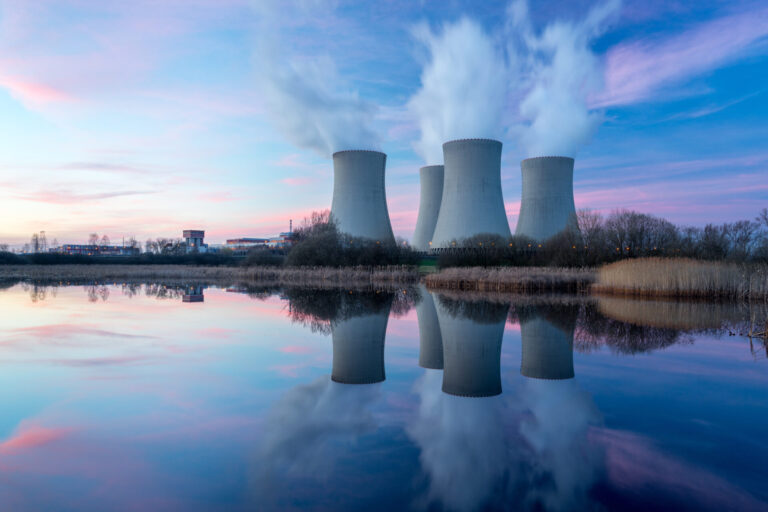
The result of these headwinds increases the value of nuclear power as a source of emission-free energy. Several large datacenters are negotiating or have executed long-term offtake agreements to meet their energy needs from nuclear generating plants.
Several companies are evaluating options to restart and/or build new nuclear units. New York’s Governor Hochul has announced the state is seeking to add a new nuclear plant.
- Existing renewable resources:
The higher cost of building new renewables is likely to increase the value of existing renewable generation. This impact should be most pronounced for those units that have shorter offtake arrangements and/or sell into state-administered RPS markets.
To learn more about how Concentric Energy Advisors’ Wholesale Energy Markets practice can assist you in navigating the intricacies of wholesale electric market design, please contact Stephen Wemple.
Sources used in this article:
Director’s Order │United States Department of the Interior
Amendment to Director’s Order of April 16th, 2025 │ United States Department of the Interior
Draft 2025 Energy Plan – New York State New Energy Plan │ NYSERDA
H.R.1 – One Big Beautiful Bill Act, 119th Congress (2025-2026) │ congress.gov
—
All views expressed by the author are solely the author’s current views and do not reflect the views of Concentric Energy Advisors, Inc., its affiliates, subsidiaries, related companies, or clients. The author’s views are based upon information the author considers reliable at the time of publication. However, neither Concentric Energy Advisors, Inc., nor its affiliates, subsidiaries, and related companies warrant the information’s completeness or accuracy, and it should not be relied upon as such.